
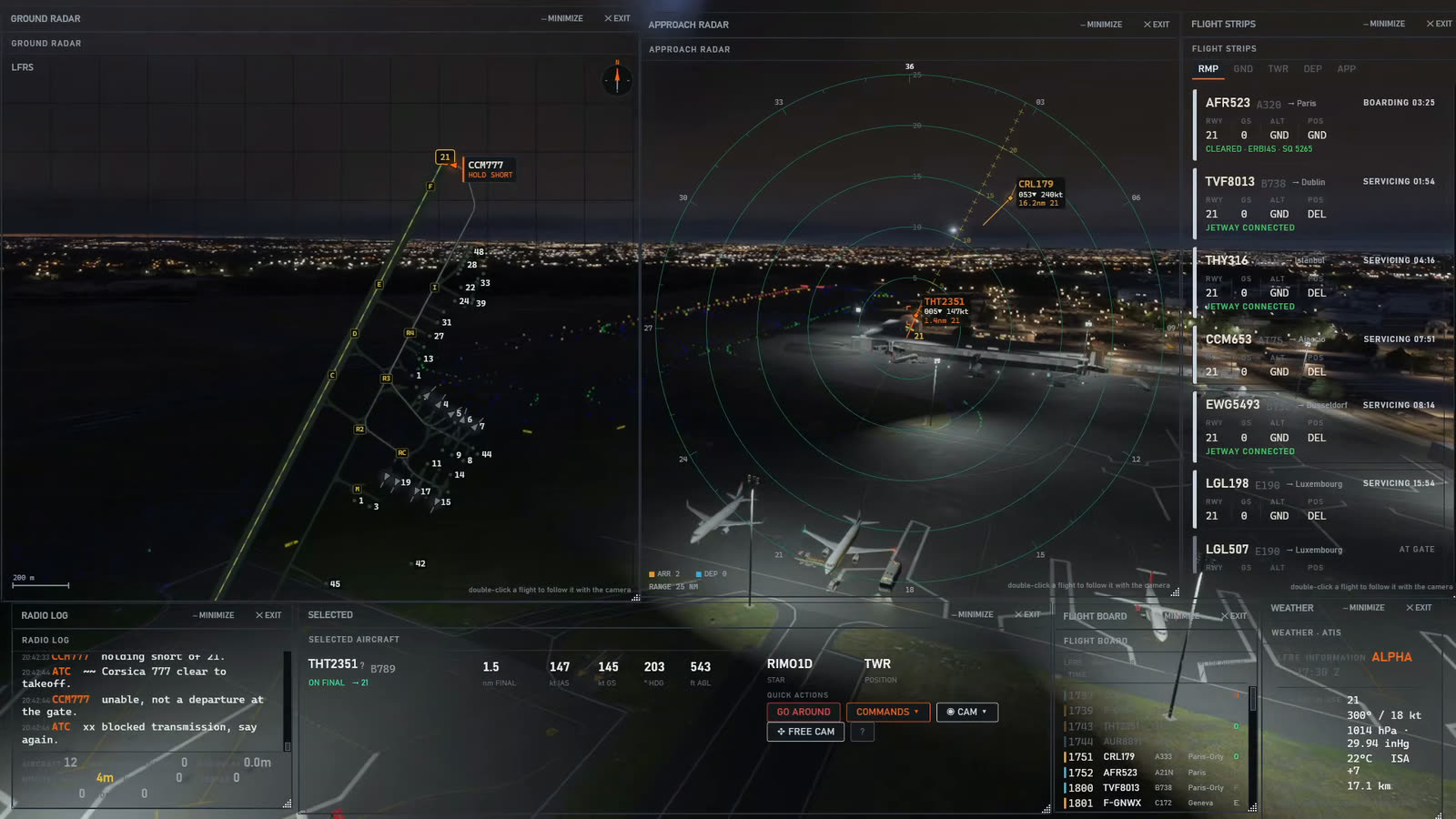
Airside is out. It is a controller's position for Microsoft Flight Simulator 2024: Ground and Tower worked from one desk, on any airport in the world, with a full day of traffic that Airside generates, flies and answers itself.
You are not flying anything. You are working the position, and every aircraft on the field is waiting on a call from you.
Every aircraft out there is flown by us
Microsoft Flight Simulator 2024 does not fly this traffic. Airside does.
Ask the simulator to put an aircraft on the airfield and that is the whole of what you get: a shape, in a place, holding still. It does not know the shape is an aeroplane with somewhere to be. Nothing pushes it off the stand, nothing takes it round a corner the way an aircraft takes a corner, nothing puts the gear down at the right moment or holds the nose up after touchdown.
So we wrote the physics ourselves. Every aircraft you can see out there is flown by Airside, frame by frame: where it is, how it is sitting in the air, how fast, gear, flaps, spoilers, lights, engines, wheels. Not a wrapper around somebody else's autopilot. A flight model, written from the aerodynamics up, and it is the thing we are proudest of.
Airside is the machine. The simulator is the screen. We work out what every aeroplane is doing and why; Microsoft Flight Simulator 2024 shows you the world it is doing it in, and it does that beautifully, which is exactly why we would rather spend our time on the aeroplanes.
We are not finished with it either. This is the part of Airside that gets better every release.
Sit down, and the field is already running
There is no scenario to load and nothing to place. Pick an airport, pick how busy you want it, press start. Aircraft are at the gates and already boarding. One is ready to push back. Two more are on final, and their crews are expecting to hear from you.
Say it, or press it
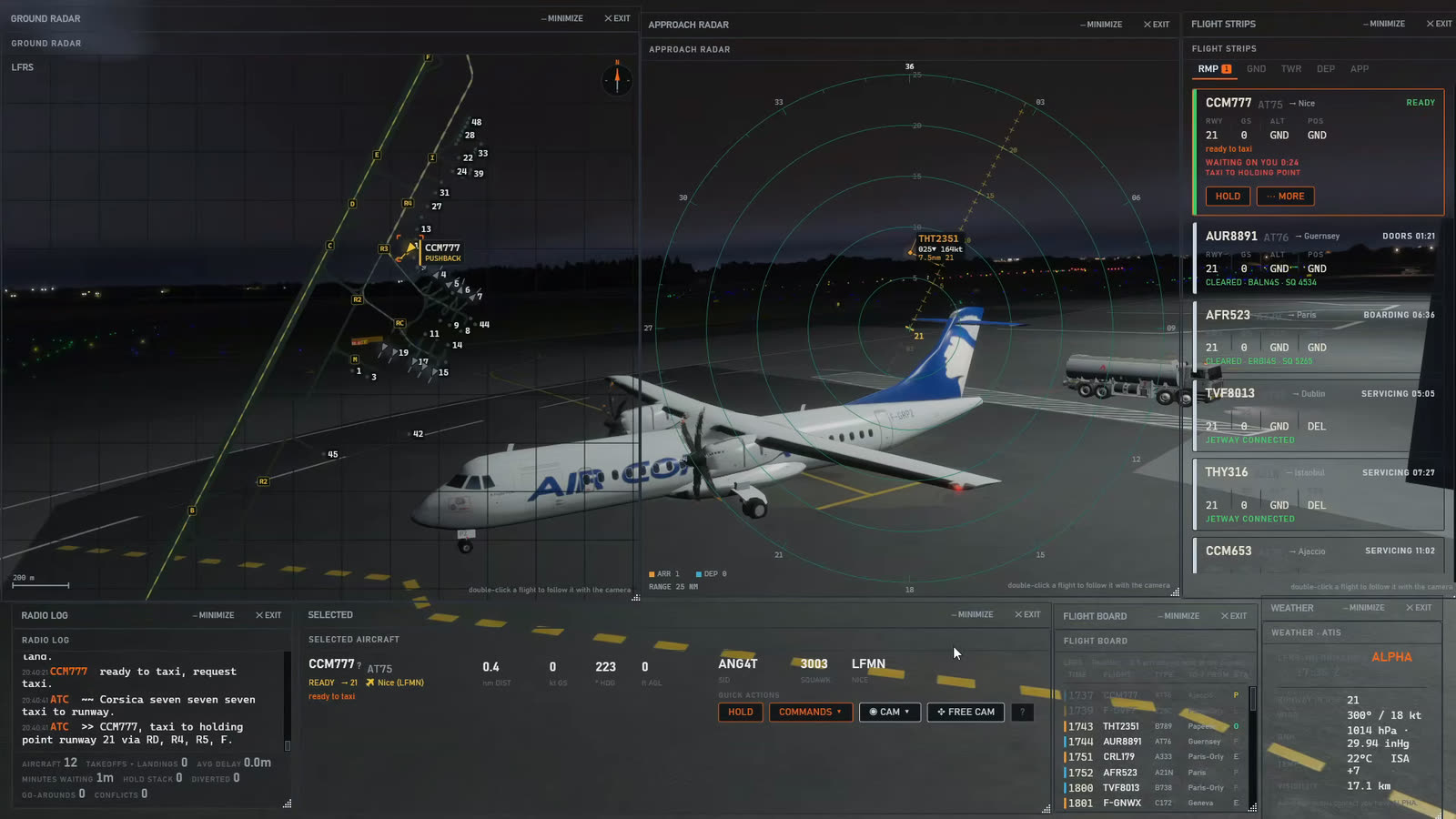
Hold a key and speak, the way you have heard it done a hundred times. The crew reads back and the aircraft does it. If you would rather not talk, select the aircraft and press the button; it is the same instruction either way. Most people end up running both at once, voice for the routine calls and buttons for the ones they want to be certain of.
There are 45 voices and accents on the frequency. Two aircraft transmitting in the same moment block each other, and you get back exactly what a real controller gets back: say again.
It keeps score, and it never congratulates you
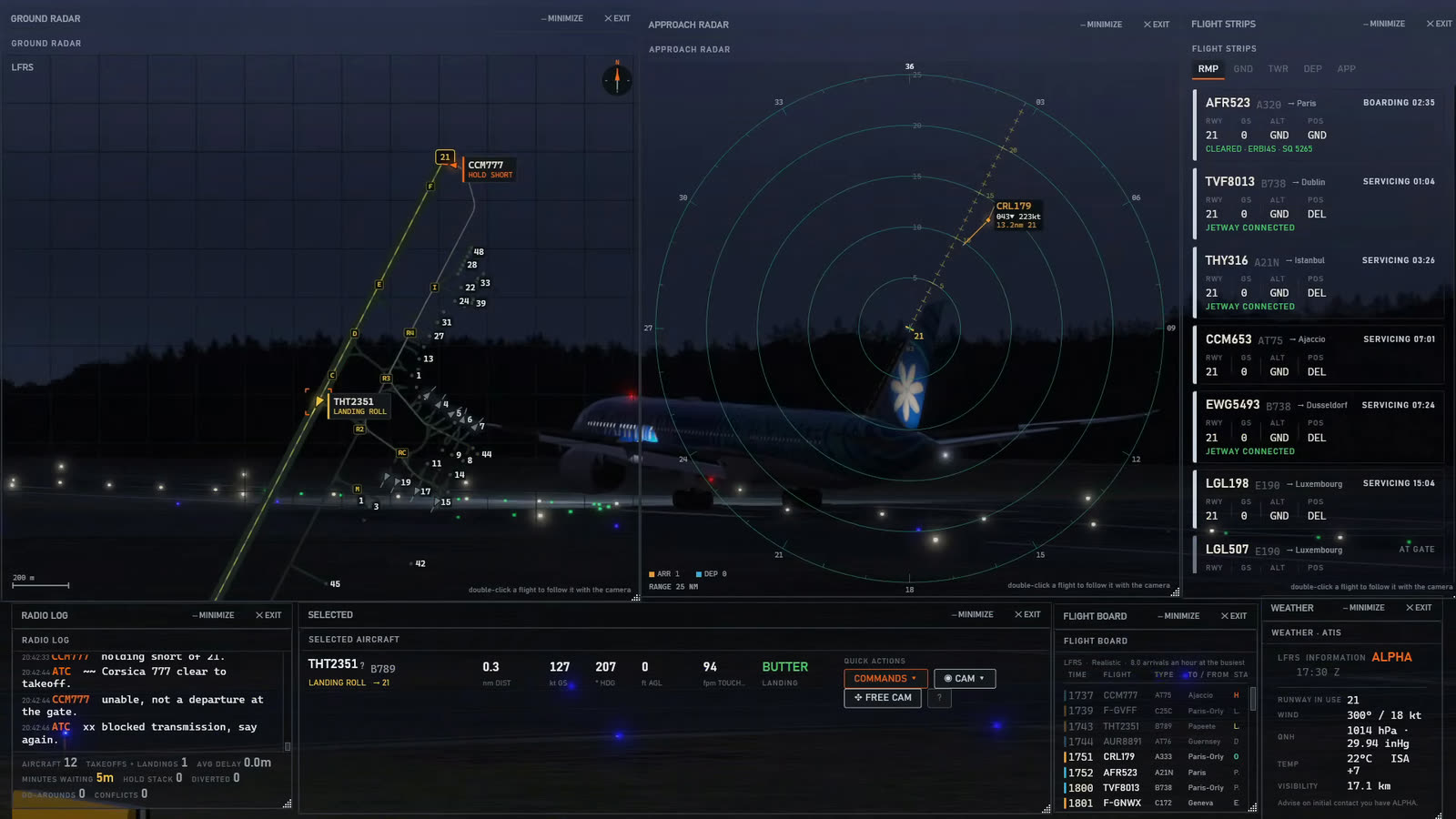
The board simply tells you the truth. Aircraft on the field, average delay, minutes waiting, the hold stack, go arounds, diverted, conflicts. Every one of those numbers is a decision you made twenty minutes ago, arriving.
Landings are read off the wheels rather than scored from a table. A 787 that touches at 94 feet per minute reads BUTTER, and that one belongs to the crew. Yours is whether they had a runway when they got there.
Every airport in the world
The airfield comes out of the simulator: runways, taxiways, stands, hold points, the signs on the ground. Nothing is hand built for a shortlist of famous airports, which is why the small field near you works the same way the large ones do.
A day, not a mission
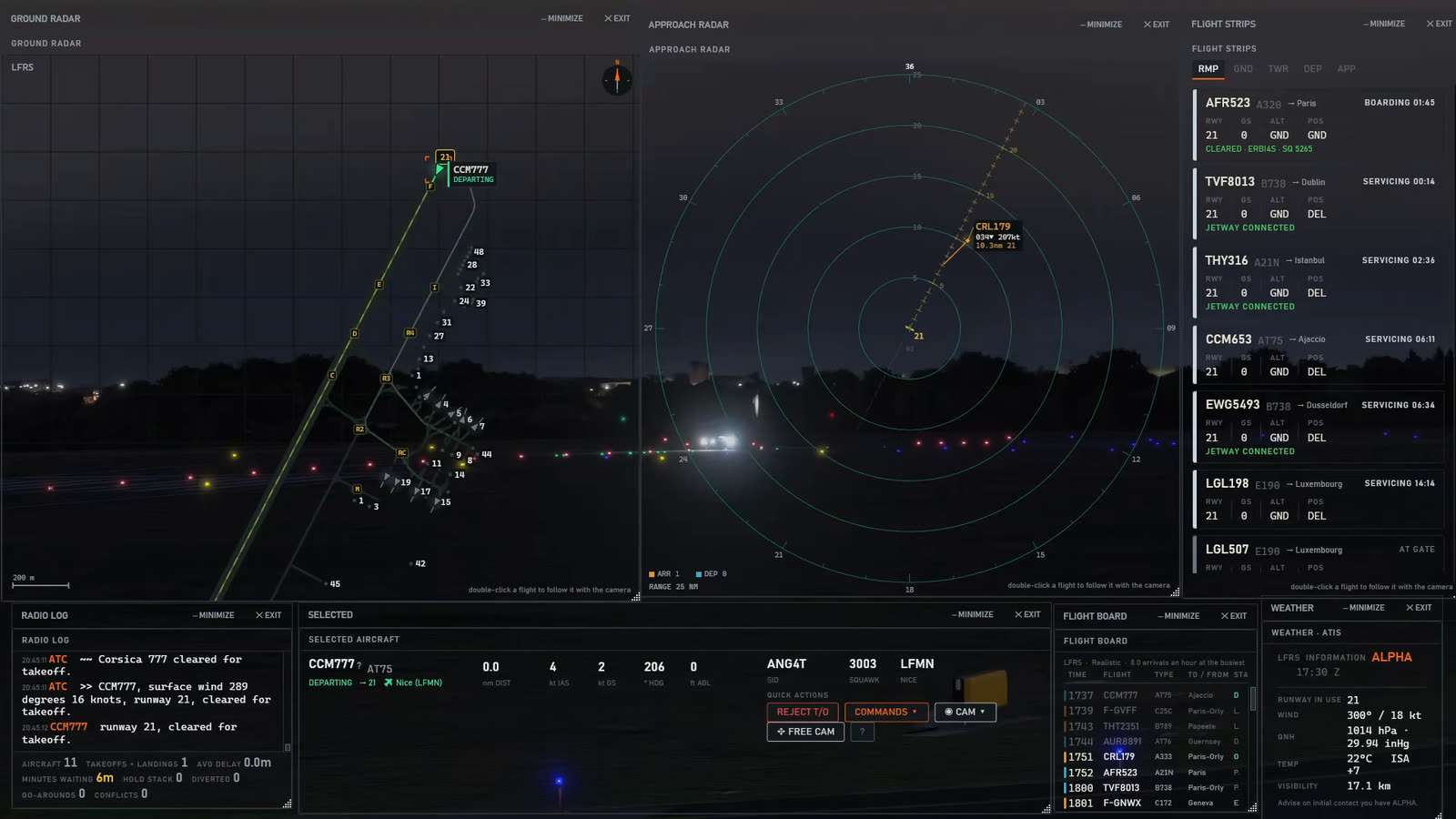
A shift is a whole day and it fills itself. Let the airport and the clock decide how much comes at you, or set the AI traffic level yourself and hold it there all shift, from a landing every quarter of an hour up to everything at once.
What it costs
€24.95 for the first 30 days, then €49.90. You buy it once and it stays yours: nothing renews, and updates are included rather than charged for. There is a supporter edition at €99.90 for anyone who wants to put more behind it. Both are on the front page.
Watch a shift before you buy one
The trailer is on YouTube, and every screen in it is the product running.
The frequency is yours. Take the position.